
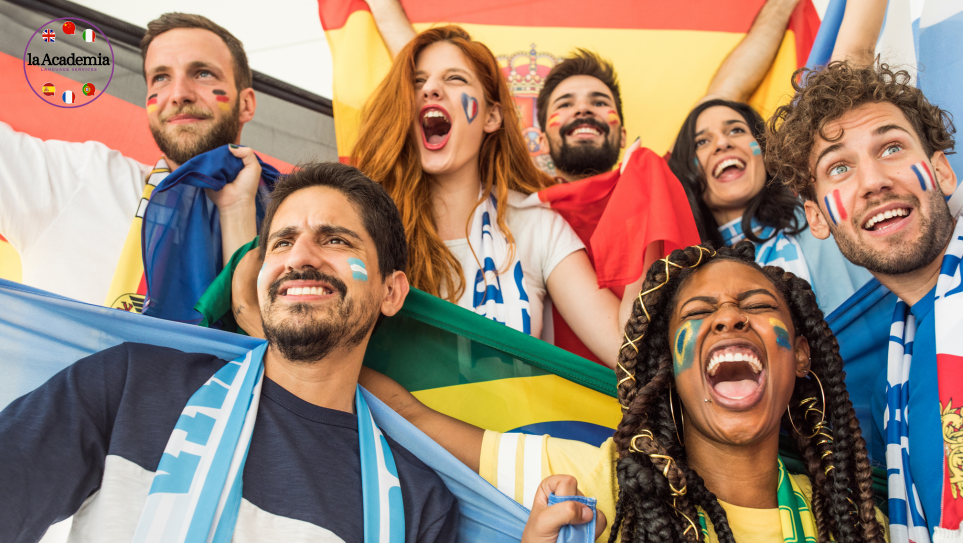
The 2026 FIFA World Cup is set to be the biggest tournament in football history. What’s more, it’s also shaping up to be one giant language lesson.
This summer’s tournament is once again proof the beautiful game is a universal language, spanning iconic powerhouses to exciting debut nations.
48 teams are heading to the United States, Canada, and Mexico. So, fans will hear a colourful mix of languages echoing through stadiums, fan zones, bars, and city streets.
Play with a World of Words
The teams competing represent more than 40 different languages, reflecting a phenomenal linguistic melting pot.
Intrepid first-time qualifiers include:
- Jordan – Primary language = Arabic
- Uzbekistan – Primary language = Uzbek
- Curaçao – Primary languages = Papiamentu and Dutch
- Cape Verde – Primary languages = Portuguese and Cape Verdean Creole
Elsewhere, familiar faces are making a long-awaited return:
- Scotland – Primary languages = English and Scots
- Norway – Primary language = Norwegian
- Haiti – Primary languages = French and Haitian Creole
And then, there’s the many teams whose mother countries are home to multiple languages.
Take One Team with Four Languages
Most countries rally around a single national language. But Switzerland likes to keep things interesting.
Depending on where you are, you’ll hear:
- German
- French
- Italian
- Romansh
“Thus, there are different versions of the salutation you’ll hear the most when following the Nati: Hop Suisse/Hopp Schwiiz/Forza Svizzera/Ancora Svizra,” explains the New York Times Athletic’s The Language of Soccer series. “They all mean the same thing – ‘Go Switzerland!’”
Kick Off with Host Languages
The tournament’s 16 host cities mainly speak the following languages:
- USA host cities – English
- Canadian host cities (Toronto and Vancouver) – English, plus French also an official language nationally
- Mexican host cities (Mexico City, Guadalajara and Monterrey) – Spanish
At la Academia, you don’t need any excuse to experience new cultures, hear new languages, and realise passion for the game sounds similar everywhere.
Get in touch whether you’re cheering in Spanish, Arabic, Norwegian, French English… or just the language of football.